
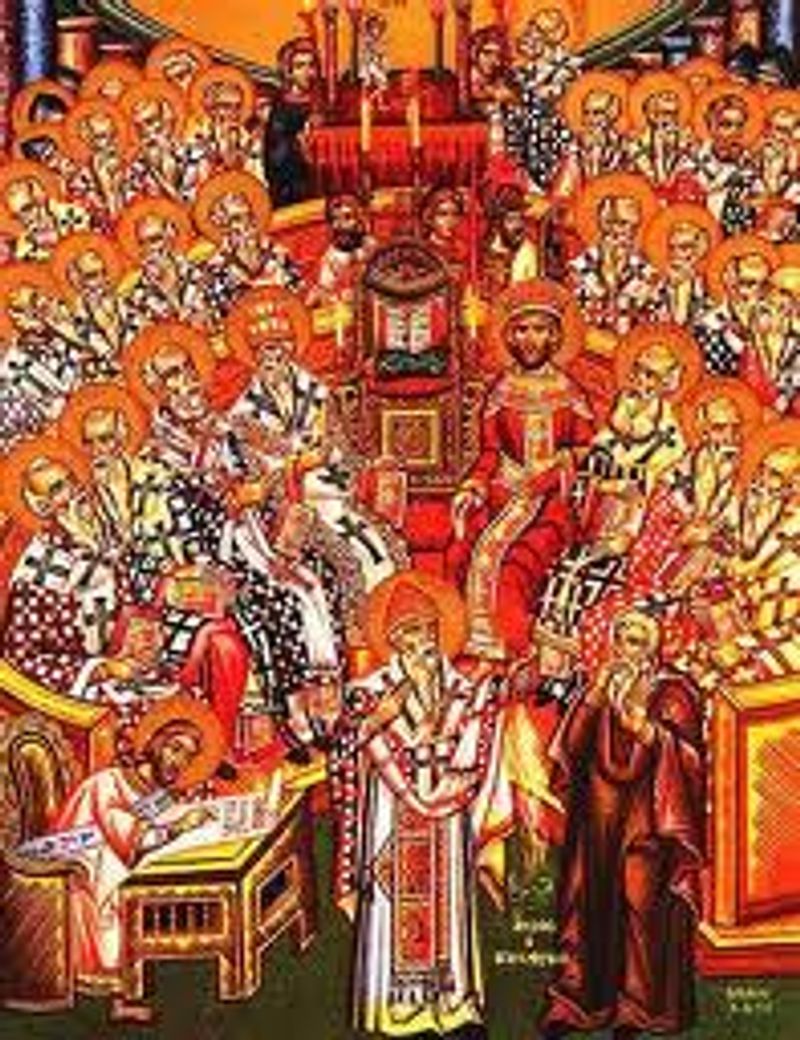
In his recent article in Theology Matters, “The Nicene Creed in Historical Context,” Jerry Andrews makes three important points about the 318 bishops who gathered for that historic “General Conference” that produced the Nicene Creed. 1. Large numbers of them still bore the physical scars of torture from living through and surviving Roman persecution. 2. According to Theodoret, who wrote less than 100 years after Nicaea, many of them had done apostolic deeds (i.e. miracles) to back up their preaching. Theodoret singles out James of Antioch, whom he says “raised the dead and restored them to life and performed many other wonders.” 3. These bishops had every reason not to trust Constantine, whose rival Licinius had signed the Edict of Toleration that ended the persecution of Christians, but then turned violently against them in “frantic rage.” Constantine had street cred. He passed courageous laws against pagan sacrifice, built churches, and commanded 50 master copies of the Bible to be made (after his predecessors had destroyed so many). These 318 bishops came to Nicaea because they knew Constantine was the real deal.
So don’t let opponents of the Nicaea “General Conference” trash the Nicene Creed, or the Biblical canon, which Nicaea did not create (that was done at the grassroots level), but simply reaffirmed. The Nicene bishops were truly apostolic. Many of them had both the deeds and scars of Jesus to prove it.
